
Every outdoor camera spec sheet lists an IP rating, and most buyers read it like a score where a bigger number wins. It does not work that way. IP67 is not a better IP66. IP68 can mean almost anything. And an IP66 camera is not automatically NEMA 4X, even when the box looks identical.
This guide explains what each rating actually tests, using the numbers from the standards, and then applies them to the places where commercial cameras and enclosures fail in the GTA: freezers, food plant washdown rooms, loading docks and parking garages. It is the same thinking we use when we spec commercial CCTV systems and the boxes, glands and cable that go with them.
Key takeaways
- An IP code is two separate grades. The first digit (0 to 6) covers dust and solids. The second (0 to 9) covers water.
- IP65 and IP66 are jet tests. IP67 and IP68 are immersion tests. A device rated only IP67 has not been proven against jets, which is why good cameras say IP66/IP67.
- IP68 has no fixed test. The manufacturer sets the depth and time, so ask for both.
- NEMA 4X adds what IP never tests: corrosion, icing, gasket aging and construction rules. NEMA 4X covers IP66, but IP66 does not prove NEMA 4X.
- In Canada the electrical code works with enclosure Type ratings (CSA C22.2 No. 94.2, the same as UL 50E), not IP codes.
- For most outdoor cameras in Southern Ontario, IP66 is the floor. Pay for NEMA 4X where salt, chemicals or washdown are involved.
How to Read an IP Rating
IP stands for Ingress Protection. The system comes from IEC 60529, which Canada adopts as CAN/CSA-C22.2 No. 60529. A code has the letters IP followed by two digits, and sometimes a letter or a second code after a slash.
Three rules make spec sheets much easier to read:
- An X means “not tested”, not “zero”. IPX7 tells you the water result and nothing about dust.
- Up to 6, a higher water digit includes the lower ones. An IPX6 product also meets IPX5, IPX4 and so on. That chain stops at 6.
- 7 and 8 do not include 5 and 6. Under IEC 60529, a product marked only IPX7 or IPX8 is treated as unsuitable for water jets unless it is dual coded, for example IP66/IP67 or IP66/IP68.
IP Rating Chart: What Each Digit Means and How It Is Tested
Here is the full chart, with the actual test behind each grade. Most rating charts online stop at the description. The test conditions are what tell you whether a rating fits your site.
First digit: solids and dust
| Digit | Protected against | How it is tested |
|---|---|---|
| 0 | Nothing | No test |
| 1 | Objects 50 mm and larger, such as the back of a hand | 50 mm sphere must not pass through |
| 2 | Objects 12.5 mm and larger, such as fingers | 12.5 mm sphere and a jointed test finger |
| 3 | Objects 2.5 mm and larger, such as tools | 2.5 mm rod |
| 4 | Objects 1 mm and larger, such as wires and screws | 1 mm wire |
| 5 | Dust-protected. Some dust can get in, but not enough to affect operation | Talcum powder circulated in a dust chamber |
| 6 | Dust-tight. No dust gets in | Same chamber, with the enclosure under vacuum (2 kPa below outside pressure) to pull dust in |
That vacuum detail matters. A dust-tight test sucks on the enclosure, much like a sealed housing does when it cools at night. A housing that stays clean inside under suction has seals that can also stand up to that daily breathing.
Second digit: water
| Digit | Protected against | How it is tested |
|---|---|---|
| 0 | Nothing | No test |
| 1 | Vertically dripping water | Drip box, about 1 mm of rain per minute, 10 minutes |
| 2 | Dripping water with the device tilted up to 15° | 3 mm per minute, 2.5 minutes in each of four tilt positions |
| 3 | Spray up to 60° from vertical | Oscillating tube or spray nozzle, 5 to 10 minutes |
| 4 | Splashing from any direction | Spray nozzle at 10 L/min, at least 5 minutes |
| 5 | Water jets from any direction | 6.3 mm nozzle, 12.5 L/min, 2.5 to 3 m away, at least 3 minutes |
| 6 | Powerful water jets from any direction | 12.5 mm nozzle, 100 L/min, 2.5 to 3 m away, at least 3 minutes |
| 7 | Temporary immersion | Bottom at least 1 m deep (top at least 15 cm under), 30 minutes |
| 8 | Continuous immersion beyond IPX7 | Depth and time set by the manufacturer, harder than IPX7 |
| 9 / 9K | Close-range, high-pressure, hot water | 80 °C water at 8 to 10 MPa, 14 to 16 L/min, 10 to 15 cm away, 30 s at 0°, 30°, 60° and 90° on a turntable |
IPX9 was added to IEC 60529 in 2013. IP69K is the same water test from ISO 20653, the road vehicle standard that grew out of Germany’s DIN 40050-9. You will see it written as IP69K or IP6K9K on camera spec sheets. There is also an IPX6K in ISO 20653, a jet test at 75 L/min and much higher pressure than plain IPX6.
IP65 vs IP66 vs IP67 vs IP68 for Cameras and Enclosures
All four are dust-tight. The difference is entirely in the water test, and in what that test is trying to imitate.
| Rating | Water test | What it imitates | Where it fits on a commercial site |
|---|---|---|---|
| IP65 | Water jets, 12.5 L/min | Hard rain, a garden hose | Sheltered outdoor spots, covered entrances, indoor areas that get hosed lightly |
| IP66 | Powerful jets, 100 L/min | Wind-driven rain, snow melt, a pressure-washed wall | The normal outdoor baseline: building walls, poles, loading docks, rooftops |
| IP67 | 1 m immersion for 30 min | A dunk in a puddle, brief flooding | Low mounts, pits, areas that can flood for a short time. Best when paired with IP66 |
| IP68 | Deeper or longer than IP67, set by the maker | Ongoing submersion | Underground vaults, in-ground fixtures, connectors that sit in water |
| IP69K | 80 °C water at 80 to 100 bar, close range | Sanitation washdown | Food and beverage processing, wash bays |
IP66 vs IP67: which is better for an outdoor camera?
Neither is better. They answer different questions. IP66 asks whether the housing can take a hard hit of water from every angle. IP67 asks whether it can sit in still water for half an hour. A camera on a wall in the rain faces the first problem far more often than the second.
The physics shows why they are not the same test. The IPX6 jet leaves a 12.5 mm nozzle at roughly 13.6 metres per second. That stream carries about 23 newtons of force, a bit like pressing a 2.3 kg weight onto a spot the size of a coin, and the tester sweeps it across every seam. IPX7 puts about 10 kPa on the housing at one metre deep, around a tenth of the IPX6 nozzle pressure, but holds it for 30 minutes. Jets beat gasket lips and overlapping joints by force. Immersion finds slow paths, like a cable gland that is a little loose.
So the practical answer for an outdoor camera is IP66 at minimum, and IP66/IP67 when you can get it. Most commercial outdoor cameras from the major brands carry both. A camera that lists only IP67 has a gap: by the standard, it has not been shown to handle jets.
Is IP65 enough outdoors in Ontario?
For a camera under a deep canopy, usually yes. For an exposed wall, we would not spec it. IP65 is tested with an eighth of the water flow of IP66. GTA winters add wind-driven snow that melts and refreezes in seams, and spring brings a week of sideways rain. The price gap between IP65 and IP66 cameras is small, and most business-grade outdoor cameras are IP66 anyway. The bigger risk with IP65 is usually the junction box or the connector, not the camera.
What does IP68 actually mean?
IP68 means the device passed an immersion test that is tougher than IPX7, on terms the manufacturer chooses. One maker might test at 1.5 m for an hour. Another might test at 10 m for a week. Both can print IP68. If a submersion rating matters for your job, ask for the depth and duration in writing. If the answer is vague, treat it as IP67.
For cameras, IP68 is rarely the deciding spec. It matters more for things that live below grade: connectors in a hand hole, fiber closures in a vault, or fixtures in a pit that collects water. If you are running cable to a site like that, the fiber or copper splice point usually needs more attention than the camera does.
What an IP Rating Does Not Tell You
An IP test is done once, on a new sample, in a lab, usually with clean water at room temperature. That makes the result repeatable. It also means a long list of real site conditions sit outside the rating entirely:
- Corrosion. Road salt, sea air, chlorinated cleaners and ammonia are not part of any IP test.
- Cold and heat. IP says nothing about operating temperature. That is a separate line on the spec sheet.
- Condensation. A sealed housing that warms in the day and cools at night can pull moist air in through a gland and fog the lens from inside.
- Ice. Freeze-thaw cycles can lift gaskets and jam PTZ mechanics. IP has no icing test.
- UV and aging. Plastics and gaskets harden and crack in the sun. A five-year-old seal is not the seal that was tested.
- Impact. Vandal and forklift resistance is the IK rating, a separate scale where IK10 is the usual commercial target.
- Your installation. The camera’s rating does not cover the box, the gland, the conduit or the cable you connect to it.
The Canadian twist: CSA’s own adoption of IEC 60529 points out that the Canadian Electrical Code mandates enclosure Type designations, not IP codes. IP codes can be used alongside them. So for a junction box, pull box or control enclosure on a Canadian job, “Type 4X” is the term that lines up with the code. “IP66” is extra information.
NEMA 4X vs IP66: What the X Adds
NEMA 250 is the North American enclosure standard. In Canada, the matching requirements are in CSA C22.2 No. 94.2, which is one harmonized document with UL 50E in the US and NMX-J-235/2 in Mexico. Enclosures are marked as “Type 4X” under those standards. In conversation, everyone still calls it NEMA 4X.
Need Network Cabling in Toronto?
Free onsite survey within 48 hours. Fluke DSX tested to TIA-568 limits.
A Type 4 enclosure is built for indoor or outdoor use and must keep out rain, sleet, snow, windblown dust, splashing water and hose-directed water, and stay undamaged when ice forms on it. Type 4X adds corrosion resistance. Here is how that compares with IP66:
| What is checked | IP66 | NEMA / CSA Type 4 | NEMA / CSA Type 4X |
|---|---|---|---|
| Dust | Dust-tight (vacuum dust chamber) | Windblown dust | Windblown dust |
| Water | Jets at 100 L/min, 12.5 mm nozzle, 3 min or more | Hose test: 1 inch nozzle, 65 US gal/min (about 246 L/min), from 10 ft or more, 5 min | Same hose test |
| Rain and external ice | Not tested | Yes | Yes |
| Corrosion | Not tested | Outdoor rust test against galvanized steel | Added 200 h salt spray, judged against 304 stainless |
| Gasket aging, construction rules | Not covered | Covered | Covered |
| Tested as installed and ready to use | Not required | Yes | Yes |
Two things follow from that table. First, the conversion only runs one way. NEMA itself says a Type 4X enclosure meets or exceeds IP66, but an IP rating cannot be converted into a NEMA Type, because IP leaves out corrosion, icing, gasket aging and construction. Second, the NEMA hose test moves well over twice the water of the IPX6 jet, so a true Type 4X box has already proven itself against a harder spray than IP66.
The other common cross-references: Type 6 is roughly IP67 (occasional temporary submersion), and Type 6P is roughly IP68 (prolonged submersion, and it must also pass the 4X corrosion test). Types 12 and 13, used inside plants for dripping oil and coolant, sit around IP54 and are not outdoor ratings.
A recent change: the harmonized UL 50E / CSA C22.2 No. 94.2 standard now has a “PW” ancillary rating for enclosures built to handle exterior cleaning with high-pressure power washers, tested under a new clause. It can be added to Types 3, 3X, 3S, 3SX, 4, 4X, 6, 6P, 12, 12K and 13. If you run hot pressure washdowns, a Type 4X PW box is worth asking your supplier about.
Which Rating Each Commercial Environment Actually Needs
Here is how we apply all of this on real jobs. The camera and the enclosure around its connection are listed separately, because they fail in different ways.
Cold storage and freezers
Water ingress is rarely the problem in a freezer. Cold, condensation and cable are. Freezer rooms commonly run around -25 °C, and blast freezers go colder. Every time a dock door or freezer door opens, warm humid air rolls in and condenses on anything cold, including the camera dome.
- Camera: IP66/IP67 is plenty for the freezer itself. What matters more is an operating range that goes well below the room temperature, often -40 °C, plus a heater or a cold-start feature. Some cameras will run in deep cold once powered, but refuse to boot from a frozen state.
- Placement: keep cameras out of the direct airflow at the door. The doorway is where frost and fog form first.
- Power: heaters draw extra PoE power. Budget for it at the switch. Our guide to PoE power limits for cameras covers the classes.
- Cable: standard PVC jacket stiffens and can crack when it is flexed in deep cold. Use cable rated for the temperature, and leave it alone once it is dressed. See our breakdown of cable jacket types.
- NEMA 4X? Only if the room is washed down with chemicals, or the plant uses ammonia refrigeration. Ammonia attacks copper and brass, so keep exposed brass fittings out of those rooms.
Food plant washdown areas
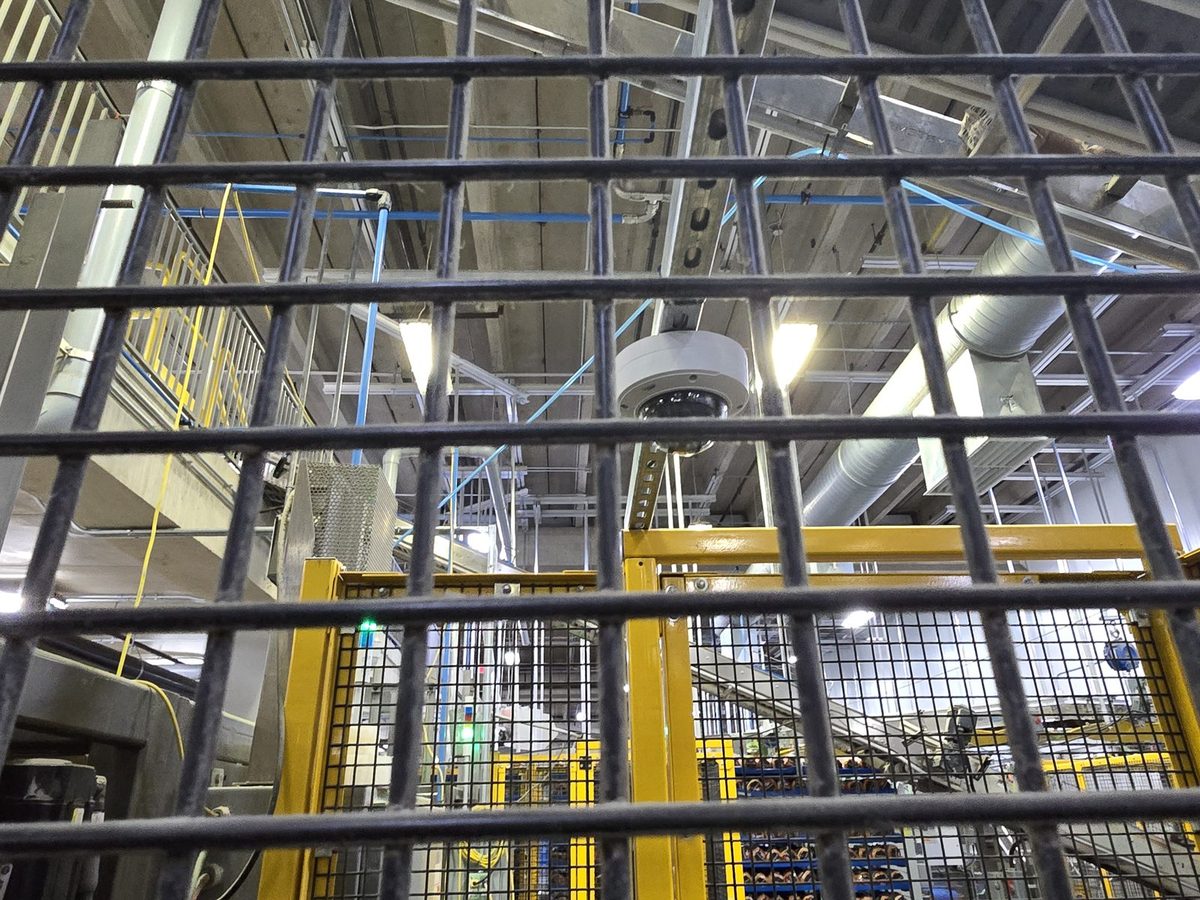
This is where IP ratings are tested hardest in the real world. Sanitation crews hit every surface with hot water and chlorinated or caustic cleaners, often from close range. A camera that is fine on a wall in the rain can fail here within months.
- Camera: IP69K or IP6K9K, plus IP66/IP67 and NEMA 4X, in 316L stainless with a smooth body that sheds water and does not trap residue. Some makers also certify cameras to NSF/ANSI 169 for food processing equipment.
- Enclosures and boxes: Type 4X in 316 stainless or a rated non-metallic material. A PW rating is a plus where pressure washers are used.
- Glands and fittings: stainless or nylon glands sized to the cable, entries from the bottom, and no open threads where bacteria can sit.
- Coordinate with sanitation. Ask how the room is cleaned, at what temperature and pressure, and with which chemicals. That answer sets the spec, not the brochure.
Loading docks
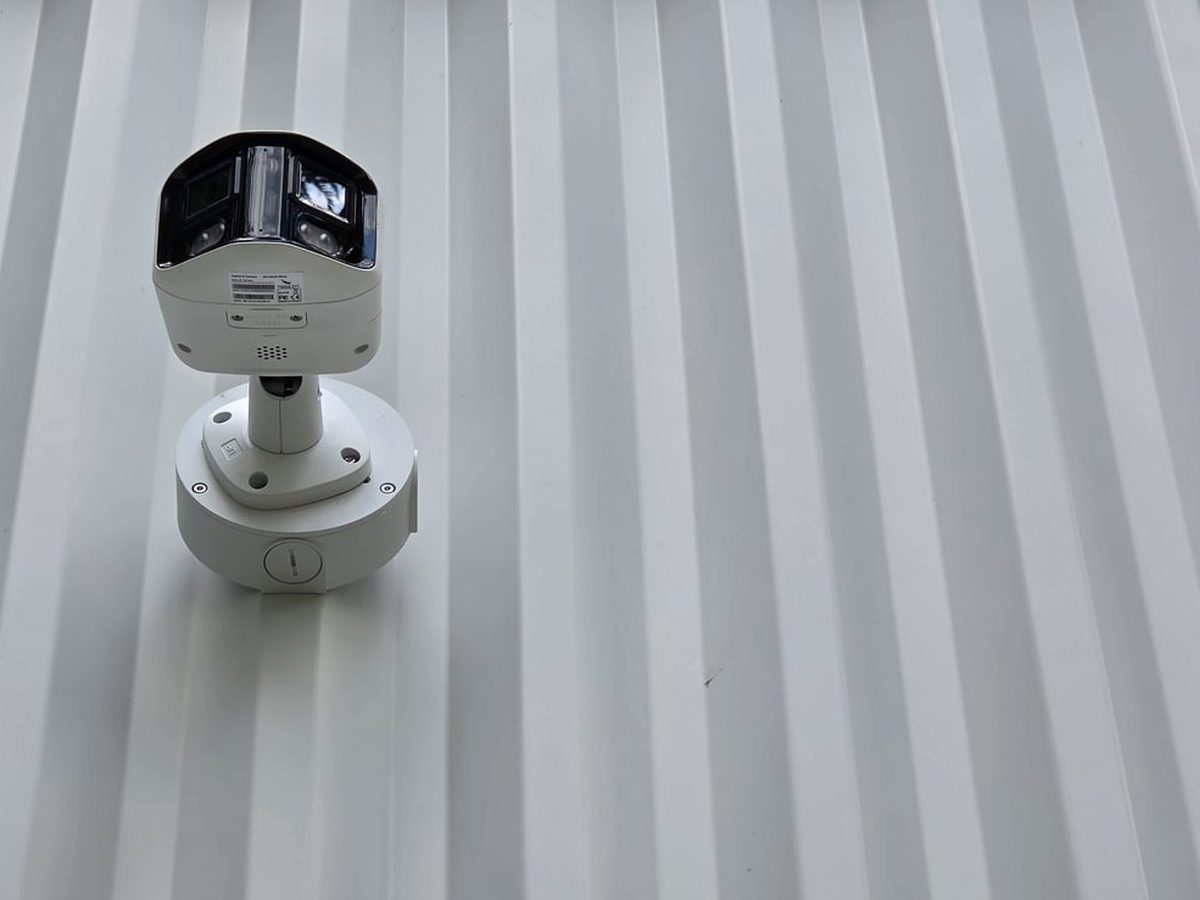
Docks get wind-driven rain and snow through open doors, slush tracked in on pallets, diesel exhaust, and the occasional pressure wash. Cameras also sit within reach of trailers and forklifts.
- Camera: IP66 minimum, IP66/IP67 preferred, with IK10 for anything below about 4 m.
- Enclosures: a Type 4 box at each exterior camera is usually enough. Step up to 4X if the dock is washed with chemicals or faces a salted truck court.
- Light: docks swing from bright doorway to dark trailer interior, so wide dynamic range matters as much as weather rating. Our article on lux levels and night performance explains why.
For a full layout of dock and yard coverage, see our warehouse CCTV installation page and our guide on how many cameras a business needs.
Parking structures and garages
Parking garages look sheltered, so people under-spec them. In the GTA they are one of the most corrosive places you can mount a camera. Cars drip salt brine all winter. It dries into chloride dust, gets kicked up into the air, and then gets washed around in the spring cleaning.
- Camera: IP66/IP67 with IK10. Coated aluminum housings work on upper levels. On ramps and lower levels where brine collects, stainless hardware or a 4X-rated housing lasts much longer.
- Enclosures and hardware: Type 4X boxes, stainless mounting screws, and non-metallic or stainless glands. Watch for stainless screws in aluminum housings with no isolation, which can corrode at the joint.
- Grade 304 vs 316: 316 contains molybdenum and holds up far better to chlorides. For road salt, 316 is worth the difference.
Outdoor walls, poles and rooftops
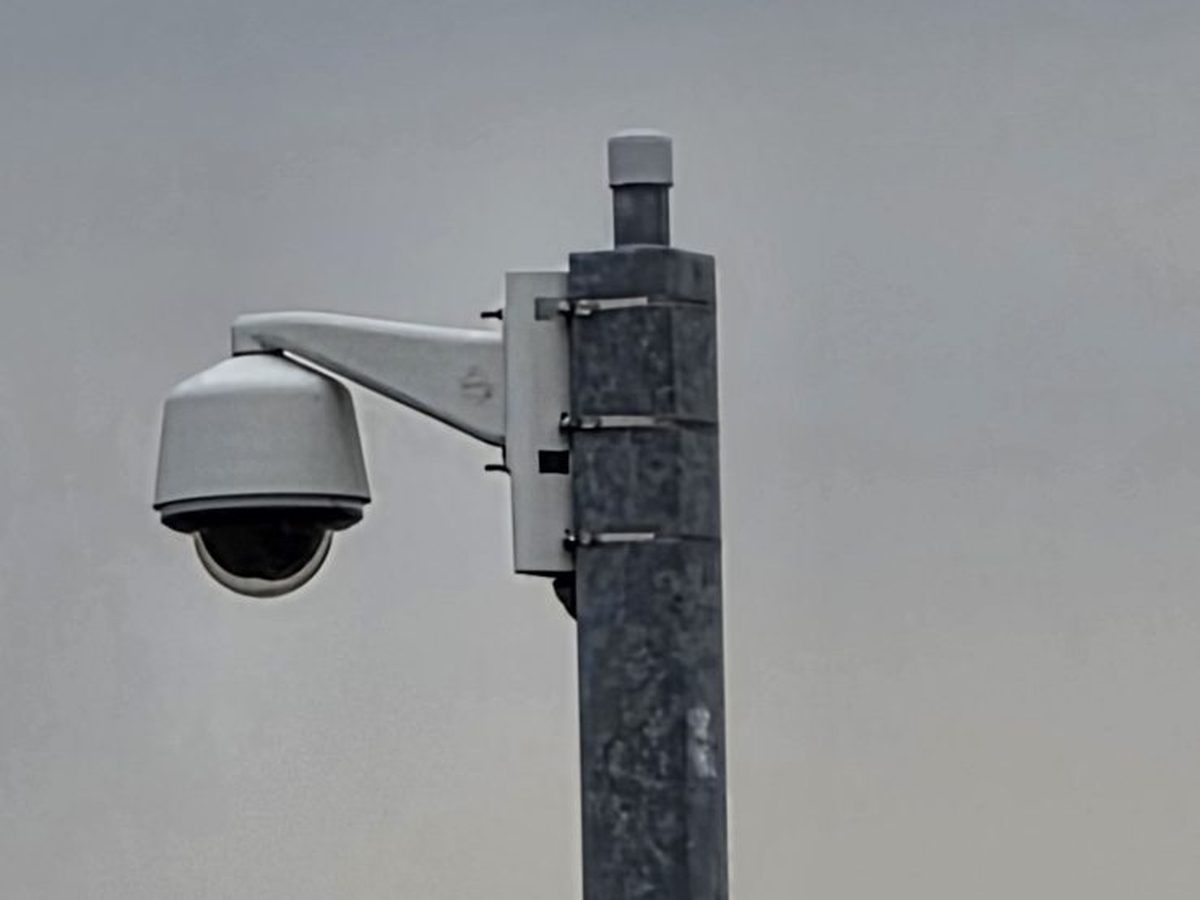
This is the everyday case: a camera on a building or a pole with nothing over it. IP66/IP67, an operating range down to at least -30 °C (we prefer -40 °C), a sunshield where it faces south, and a Type 4 or 4X box for the connection. PTZ cameras need more care because they have moving seals. The PTZ camera guide covers the mechanics.
Manufacturing floors and hazardous areas
Inside plants, oil mist and coolant are often the enemy, not water. IP does not test oil resistance. NEMA Types 12 and 13 do. If the area has flammable gas, vapour or combustible dust, no IP or NEMA 4X rating makes a camera safe to use there. You need a housing certified for that hazardous location class or zone. We have run the wiring for explosion-proof camera housings at a CN Rail site in Vaughan, through a third-party contractor, and the hazardous-location certification drove every choice on that job.
Quick reference by environment
| Environment | Camera | Box or enclosure at the connection | Watch for |
|---|---|---|---|
| Exposed exterior wall or pole | IP66/IP67, IK10 if reachable | Type 4 | Cold start, sun, drip loops |
| Loading dock | IP66/IP67, IK10 | Type 4, 4X if salted or chemically washed | Contrast at doors, trailer strikes |
| Parking structure | IP66/IP67, IK10, stainless hardware | Type 4X | Chlorides, mixed metals |
| Cold storage or freezer | IP66/IP67, -40 °C range with heater | Type 4, 4X with ammonia or washdown | Door fog, cold boot, cable jacket |
| Food plant washdown | IP69K + IP66/IP67 + NEMA 4X, 316L | Type 4X (PW if pressure washed) | Hot chemical wash, sanitary design |
| Pit, vault, flood zone | IP68 with stated depth and time | Type 6P | Splices and connectors below grade |
| Plant floor with oil or coolant | IP66 plus oil-resistant housing | Type 12 or 13 indoors | Gasket swelling from oils |
The Rating Only Holds If the Installation Holds
When an outdoor camera fills with water, the leak is often not in the camera at all. It is in the connection behind it. A camera can be IP67 while the RJ45 inside a cheap box sits in a puddle of condensation.
- Bring cables in from the bottom. Top entries collect water. Side entries need a drip loop below them.
- Size every gland to the cable. A gland is rated for a diameter range. One that is too big for the cable will not seal, no matter how hard you tighten it.
- Use the maker’s RJ45 seal. Most outdoor cameras ship with a weatherproof connector cap or gasket kit. It is the most commonly lost part on site. A field-terminated plug on the horizontal cable, built as an MPTL link, is easier to seal than a jack in a box.
- Add a breather to sealed boxes. A small vent with a membrane lets the box breathe without letting water in, which stops the night-time vacuum that pulls in moist air.
- Use watertight conduit fittings. Set-screw connectors are for dry indoor work. Outdoors, use fittings rated for wet locations.
- Do not use vinegar-smelling silicone on electronics. Acetoxy-cure silicone releases acetic acid as it cures and can corrode contacts. If you must use sealant, use a neutral-cure type, and never as a substitute for a proper gland.
- Torque the cover screws. Too loose and the gasket never compresses. Too tight on a plastic lid and it bows between the screws.
- Use outdoor-rated cable. UV-resistant jacket above ground, water-blocked or direct-burial rated cable in underground conduit, which always ends up with water in it.
How to Read the Rating on a Camera Spec Sheet
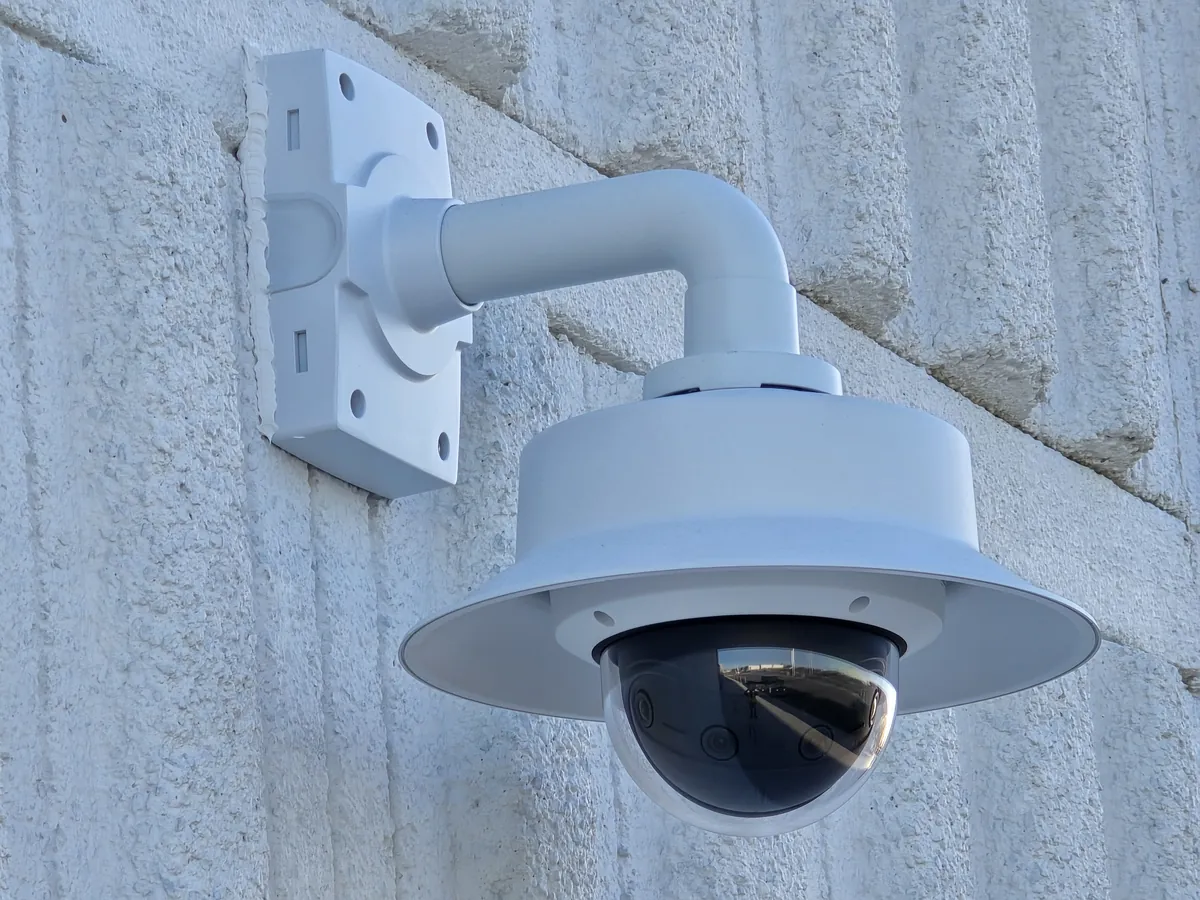
A strong outdoor camera spec will read something like: IP66, IP67, NEMA 4X, IK10, -40 °C to 60 °C. Stainless washdown models add IP6K9K. When you compare cameras or quotes, ask these questions:
- Is it dual coded? IP66/IP67 covers jets and immersion. IP67 alone does not cover jets.
- Who tested it? IP ratings can be self-declared. A report from an independent lab is better.
- Is NEMA 4X “meets” or certified? NEMA does not certify products. Look for a listing to UL 50E or CSA C22.2 No. 94.2 by a certification body, or at least a test report.
- What does IP68 mean for this model? Get the depth and time.
- Does the rating include the cable connection? Usually it assumes the supplied gasket or cap is fitted correctly.
- Can it start cold? Operating range and cold-start range are not always the same.
When Is NEMA 4X Worth the Extra Cost?
A stainless Type 4X box or a stainless camera costs several times more than the polycarbonate or painted aluminum version of the same size. For a camera on a brick wall in Mississauga, that money is better spent on a better camera. Where it pays for itself is anywhere you would otherwise be replacing hardware every few years:
- Parking garages, ramps and salted truck courts
- Food, beverage and pharmaceutical washdown areas
- Wastewater, chemical storage and pool equipment rooms
- Ammonia refrigeration plants
- Waterfront sites along Lake Ontario, where spray and salt mix in winter
The cheapest fix is often partial: a standard IP66/IP67 camera with stainless mounting hardware, a 4X junction box and stainless glands. That protects the parts that corrode first, the joints and fasteners, without paying for stainless everywhere. Good CCTV maintenance also catches corrosion early, while a gasket swap still fixes it.
Frequently Asked Questions
Is IP67 better than IP66?+
What does IP68 mean on a security camera?+
Is NEMA 4X the same as IP66?+
What IP rating does an outdoor security camera need?+
Can I pressure wash an IP67 camera?+
Does an IP rating cover cold weather?+
Which rating does the Canadian Electrical Code use for enclosures?+
Need cameras that survive the site, not just the spec sheet?
Velocity Cabling designs and installs commercial camera, access control and network cabling for warehouses, food plants, garages and offices across Toronto, Mississauga, Brampton, Vaughan and the wider GTA. We match every camera, box and gland to the environment it lives in.